Lantana Removal on the Mid North Coast
No spray, no diesel, and no bare dirt left behind for the next lot of seed to land on.
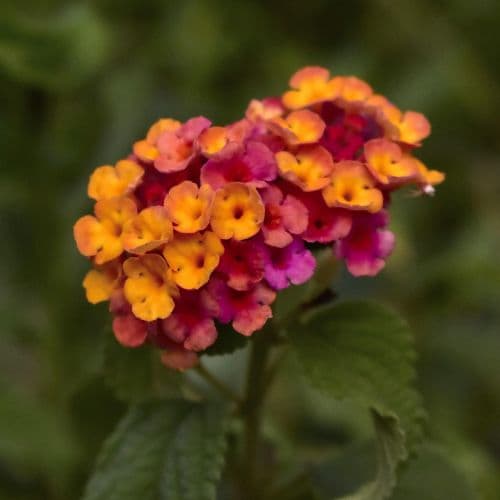
- Steep country
- Near waterways
- No chemicals
- Repeat visits
The short answer
There is no one-shot-kill for Lantana.
You chop it down, but seeds resprout and take back over.
You spray it and it dies, but now acts as a trellis for future growth.
You even set the goats on it (carefully managed), but you will ultimately get the same problem.
What you need is a multi-step or multi-method approach. Taking care of the seeds, removing the plants, and then attacking regrowth before it can produce more seeds.
Free on-site look before you commit.
Why lantana is so hard to kill
Lantana is a Weed of National Significance. It has taken over more than 1,600 kilometres of the eastern seaboard, from the NSW south coast to far north Queensland, and the Mid North Coast sits in the middle of its best country - warm, wet, and full of cleared land that used to be timber or dairy.
Three things make it stubborn. It reshoots from the crown, so cutting it off at ground level is an invitation rather than a kill. Birds spread the seed, so reinfestation arrives from the neighbours whether or not you do anything. And the seed bank in the soil keeps germinating long after the standing plants are gone, which is why the standard advice is to go back and check for regrowth and seedlings one to three months after any clearing.
What each method actually does
Spraying
Effective on accessible ground, and genuinely the right tool for some jobs. The catches are that you need a still day, a buffer from waterways, and a licence for some products - and when it works you're left with a stand of dead standing lantana and bare soil underneath, which is perfect seedbed for the next lot. Repeat use also builds resistance over time.
Manual Removal
Must be done carefully, removing all fruits and flowers before disturbing the plant to prevent seed spread. Then you need to take out as much as you can, disposing of it in garbage bags in your General Waste rather than Green Waste.
This method is hard work, requiring physical labour, and you still need to attack the regrowth problem.
Goat grazing
While it must be managed effectively, targeted goat grazing can be used as an effective way to clear lantana, especially over multiple sessions.
Just like manual removal, goat grazing requires follow-up to address regrowth.
What we do about the toxicity
Lantana is toxic to livestock. Goats are more resistant than other livestock, but particular varieties can be lethal, and all varieties must be managed carefully.
Goats who are used to Lantana know how to handle it and won't overconsume it. However unfamiliar goats must be introduced gradually, along with other goats who are familiar.
We also make sure the goats always have other feed available, whether that is other vegetation, or sometime we need to provide hay or other feed.
A realistic plan for a lantana block
- Knock the bulk down - the first graze takes the standing growth and opens the area up.
- Come back for the regrowth - this is the part that does the damage to the plant, and the part most people skip.
- Get something else growing - ground that stays covered is ground lantana has to fight for.
Questions people ask about lantana
What is the best way to get rid of lantana?
There isn't a single method that finishes it. Lantana shoots back from the crown, and the seed bank keeps germinating for years, so anything that only removes the top growth buys you a season. What works is knocking the bulk down, then hitting the regrowth again before it re-establishes - whether that follow-up is grazing, spot spraying or hand work. Any control plan that doesn't include a second visit is not a plan.
Does slashing kill lantana?
No. Slashing suppresses and contains an infestation but doesn't kill the plants, and regrowth needs following up. On steep or rocky ground a slasher often can't safely get there in the first place.
Will lantana grow back after goats have been through?
Yes, if you don't follow up. The goats will take the bulk of the plant down, allowing for easier removal or applying precise herbicide treatments. Regardless, you need to monitor for regrowth and hit it again immediately. Over multiple treatments/seasons, you'll eventually drain the seed bank and stop it coming back.
Is lantana poisonous to goats?
It is. Lantana is hepatotoxic and causes photosensitisation, and red and orange flowered stands are the worst of it. Goats can handle it better than other livestock, but we manage it carefully to ensure they always have more alternative feed available, whether that be other weeds, or feed we bring them to supplement.
Do I have to control lantana on my property in NSW?
Lantana is a Weed of National Significance and it's regulated in NSW - it can't be sold or moved. Under the Biosecurity Act 2015 every landholder carries a general biosecurity duty to take reasonable steps to minimise the risk weeds on their land pose.
Get a look at your lantana
Tell us where you are and what you’re dealing with using the form below. We’ll come and look, for nothing, and tell you straight whether goats are the right answer for your block - or whether you’d be better off with something else.
Tell us about your block
No obligation, no deposit.