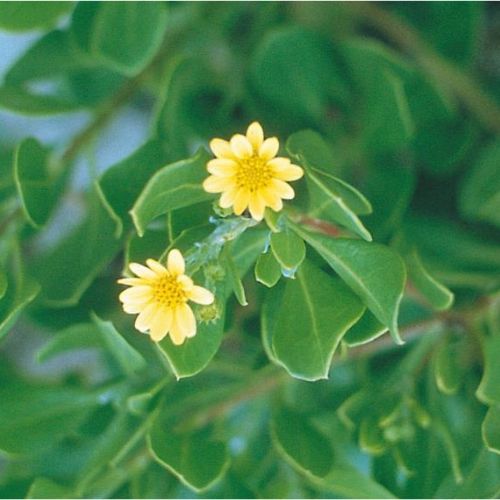
Bitou bush
A coastal invader that smothers the dune plants underneath it. Goats browse it hard, and there's no spray drift to worry about near the water.
Weeds in. Fertiliser out. No poisons, no machines.
Goat grazing across Forster and the surrounding district — part of our wider Mid North Coast run
Forster is the far end of our run, batched with our Taree jobs. We work the Great Lakes in blocks rather than one job at a time, so if you have neighbours in the same situation it is worth mentioning when you get in touch - it brings the travel cost down for all of you.
Free on-site look before you commit.
Most of what we clear here falls into these types.
Residential overgrowth - overgrown yards full of trash, bricks, shopping trolleys, can be a real problem to clear because you often can't get in there with a machine, you can't drive over a brick with a mower, and you don't want to cover the area in poison before your pets and kids play there. The goats clean up all the big woody growth and tall grasses, exposing the trash and allowing a much easier clean up.
Rural-residential acreage- back off the water around Nabiac, Failford, Rainbow Flat and the Wallamba River - one to ten acre properties, usually a house paddock that’s been kept mown and a back section that hasn’t been touched since the block was subdivided. That back section is where you get issues with lantana, blackberry and other invasive species that suppress the native species and are a nightmare to clear - but not for the goats!
Lake frontage - Wallis Lake, Smiths Lake and the blocks around Coomba Park, Green Point and Pacific Palms. Wallis Lake grows oysters, and everything you put on the ground upstream ends up in that catchment. Goats are one of the few options that put nothing in the water at all.
Coastal and dune country - Forster, Tuncurry, Hallidays Point, Black Head and the fringes around Booti Booti. Bitou bush through the dunes, sandy ground machinery chews up, and neighbours close by.
Sensitve areas and waterways - areas around crops, waterways and wildlife need careful management to avoid damaging them. Goats get in, take care of the problem and get out without poisoning the waterway, destroying the native species that are trying to break through.
Steep, rocky, uneven terrain - the timbered country behind Coomba Park and out toward Wallingat, where the ground falls away to the lake. This is the type of terrain machinery can't handle but goats are great for. If you've got a gully or creek full of blackberry and lantana, goats can get in there and clear it out.
Don't worry if you have a different issue, we'll take a look and see what we can do!
A coastal invader that smothers the dune plants underneath it. Goats browse it hard, and there's no spray drift to worry about near the water.
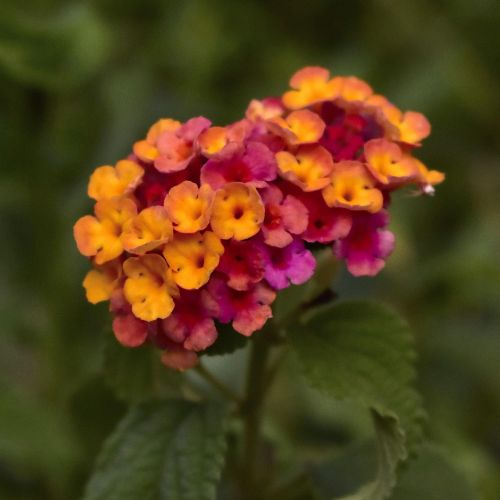
Forms thickets over anything it can get light on, and it's toxic to stock in quantity. The goats work it in moderation, with other feed always on hand.
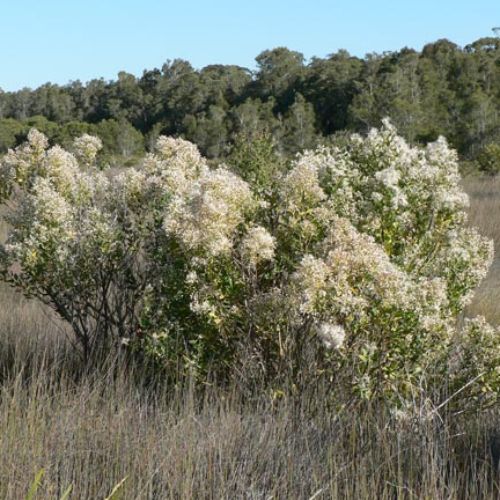
Turns up in tired pasture and wet ground, and one plant can drop over a million seeds in a season. The good news is goats eat it readily.
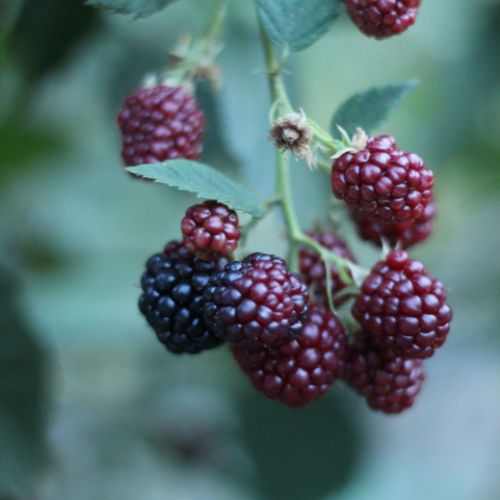
Takes over creek lines and gullies - the ground that's hardest to get a machine into. Goats strip it back and keep after the regrowth.
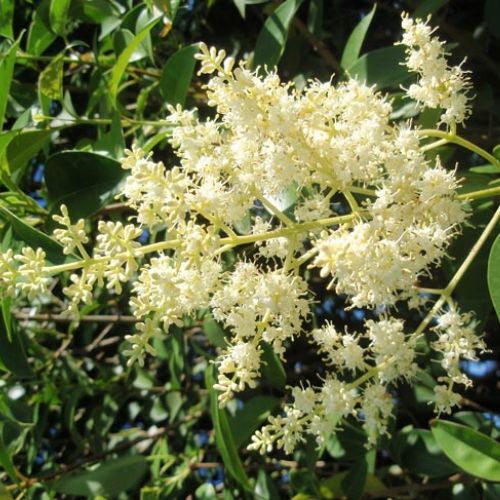
Small-leaf and broad-leaf both grow thick along creek lines and fences, and set half the street sneezing when they flower.
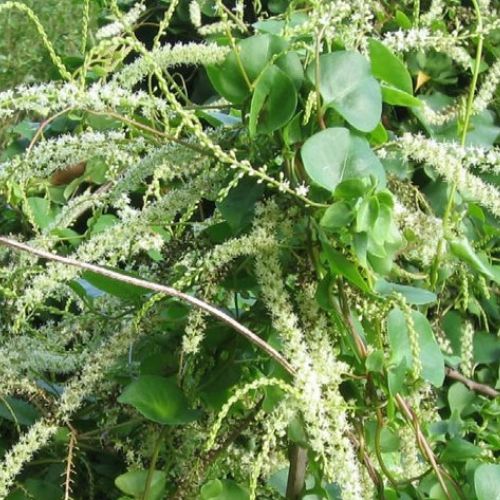
A smotherer that pulls down whatever it climbs. It drops tubers that resprout after clearing, so it usually takes more than one visit.
Green cestrum and cat’s claw creeper are both priority weeds, and neither is a goat job.
Green cestrumkills stock, and it has killed goats. Every part of it is poisonous, dead material included, and the fact that they usually walk past it is no protection when feed runs short. If it’s on your block it has to come out or be fenced off before the herd arrives - we check for it on every site inspection.
Cat’s claw creeperis the opposite problem: harmless to them, but they simply won’t eat it. If that vine is your main issue, goats aren’t the answer and we’ll tell you so rather than take the booking.
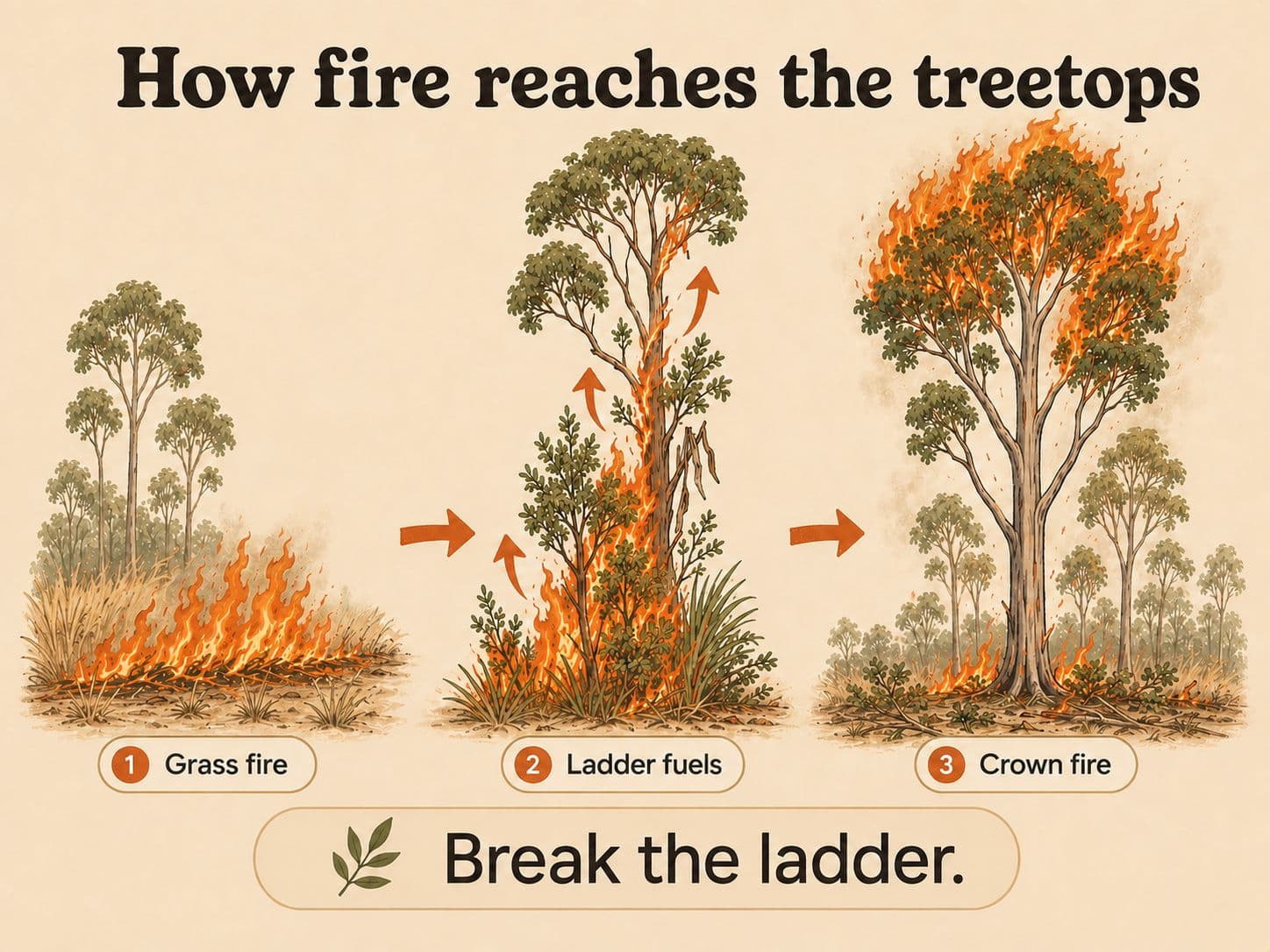
Goats are a great way to deal with fine and ladder fuel in a timbered area. They can access everything from the ground, to around 2m high. They'll eat woody, tougher vegetation than other livestock and help prevent grass fires from turning into crown fires.
If you own or manage land with an APZ obligation, goats can help you maintain a low fuel load around your property without the need for machinery, herbicides or manual clearing. This is particularly useful for slopes where machinery can't safely operate, and fire risk is even greater.
Pricing depends on a few main factors:
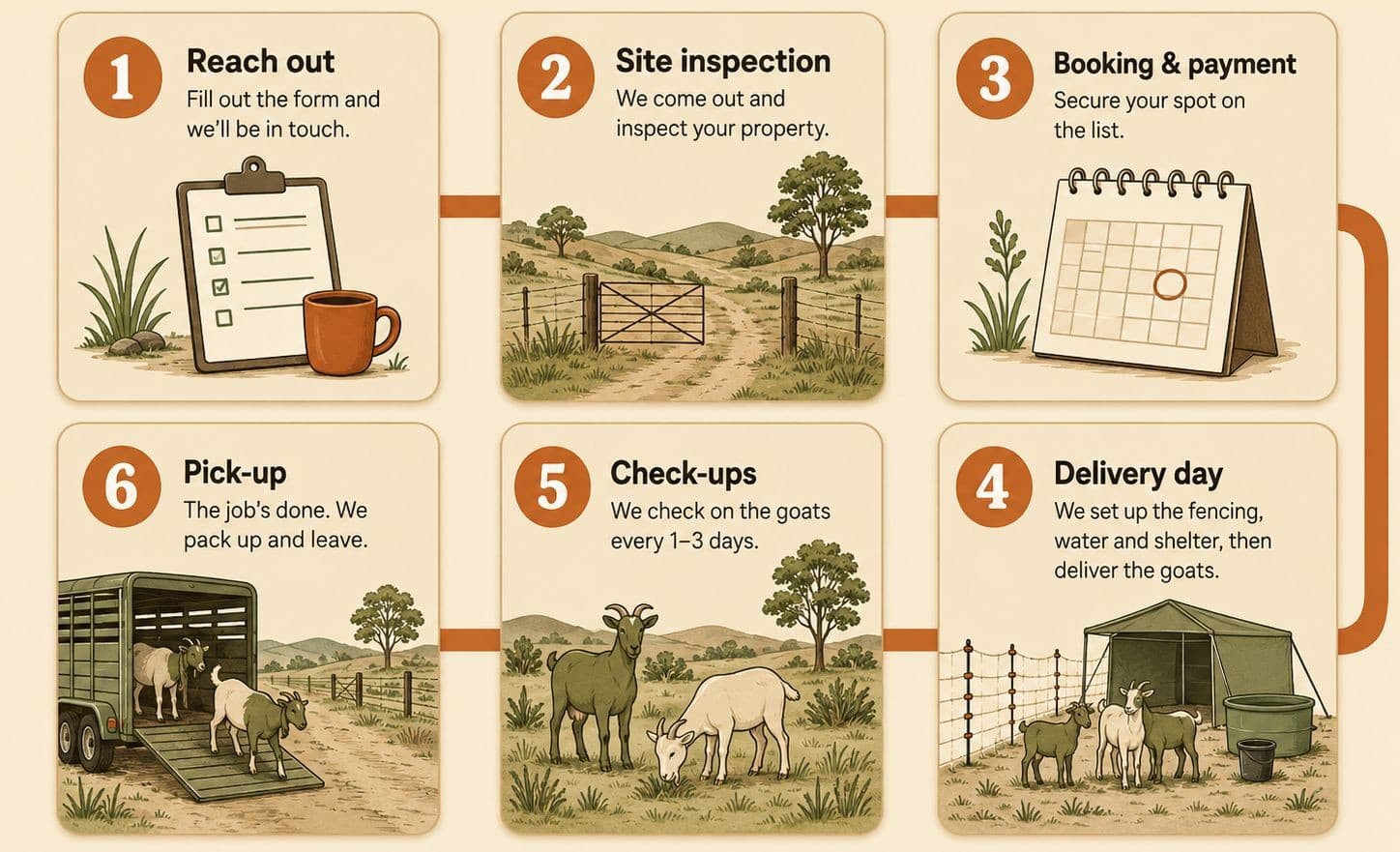
Size and density impact how long the herd will be there, and distance affects how much time and cost we incur doing checkups every 1 - 3 days.
We're working on a online price estimator you will be able to use, but for now, please reach out to us for a quote.
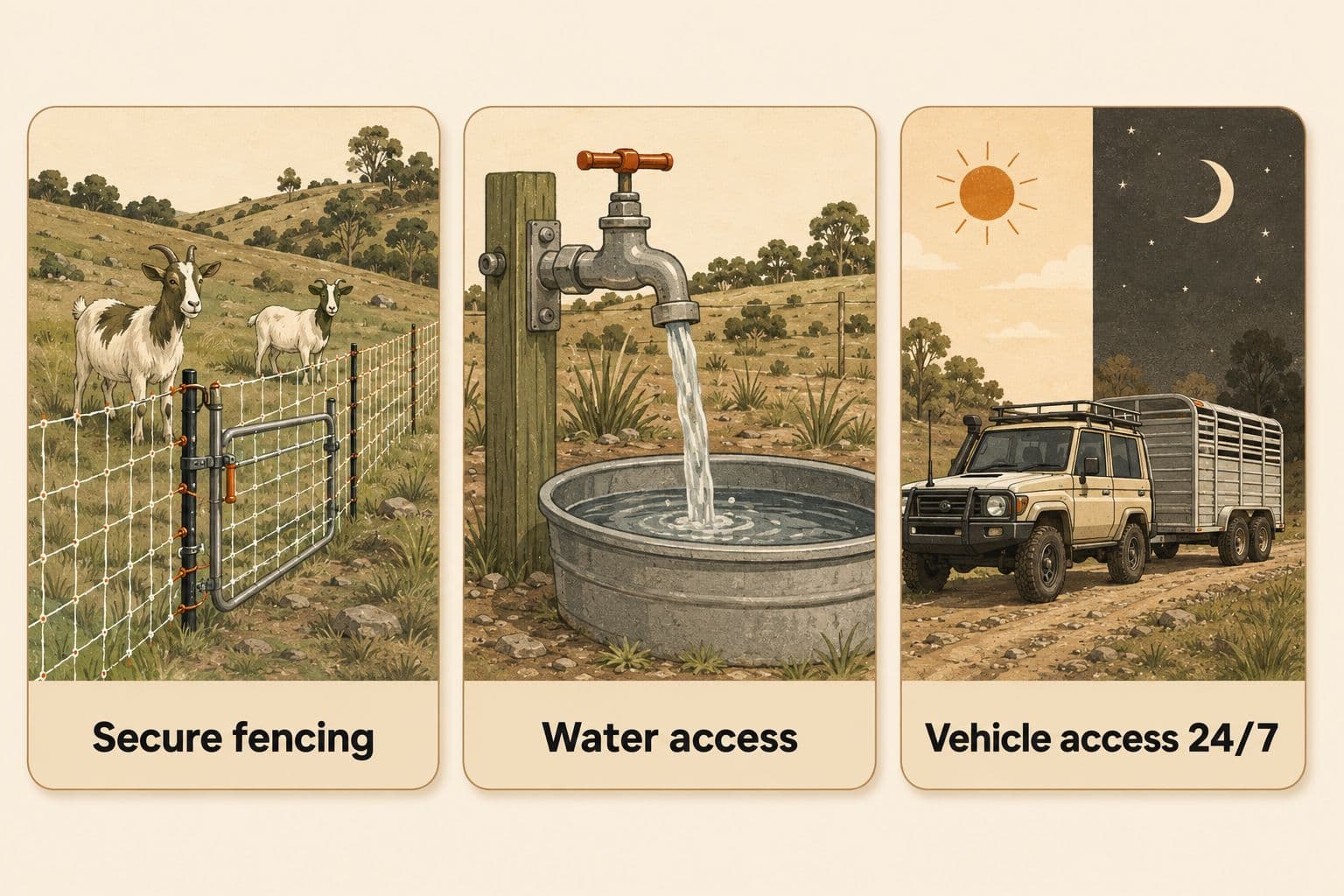
It ultimately depends on the density of your vegetation, the size of the area to clear and how many goats we have there. It also depends on the type of vegetation, as some weeds have to be slowly eaten in moderation (lantana), while others can be devoured with no issue.
Just like all the other available methods, goats aren't a one-shot-kill solution. They are best used as part of a greater solution, or as a repeated treatment to finish weeds off over a few visits.
The only time you would need to consider this is in Residential zoning, like if we were going to clear your backyard. This is because residential zoning usually prohibits the keeping of livestock, however, for a backyard situation, the goats will be there very short term. At most, you may just want to communicate what's going on to your neighbours so they don't freak out when they see us herding goats into your yard one morning.
We ask that you keep your dogs away from the herd for both the safety of the herd, and your dog. Dogs can obviously harm our goats, but goats have also been known to surround and attack dogs if they feel threatened.
Yes! Even though goats have a reputation for eating anything and everything, there is a list of weeds/plants they won't eat (because they don't like them), as well as weeds they can't eat because they are toxic. We will check your property for these while on the site inspection.
Goats can often be very friendly and affectionate, however, we insist that you refrain from entering their fence area unless we are there and you have asked us. This way we can turn off the fence and supervise the interaction, particularly with children.
Almost always us! We will check on them every 1-3 days (usually 1-2) depending on the circumstances, making sure they have water, checking them for any health concerns and moving their fence as needed.
99% is handled by us! We have insurance, handle the transport documentation, keep welfare check records and all other necessary paperwork. The only thing we need from you is a PIC (Property identification code) which we can help you get if you don't already have one.
A PIC (Property identification code) is a unique code linked to your property that is used for biosecurity and tracking livestock movements. It is assigned by Local Land Services and can be easily applied for by email or phone before your booking. Need help? Let us know and we'll do as much as we can to get you sorted.
We have a mobile phone on 24/7 for emergencies. If you notice the goats are out of their fence, look sick or you've found one deceased, please give us a call as soon as possible. We'll give you the number during your booking process.
Not exactly, it has to be flexible due to the nature of the work. If the property the goats are on need more time, they get first priority. You'll get the same priority when they're on your property.
Tell us where you are and what you’re dealing with using the form below. We’ll come and look, for nothing, and tell you straight whether goats are the right answer.
No obligation, no deposit.